


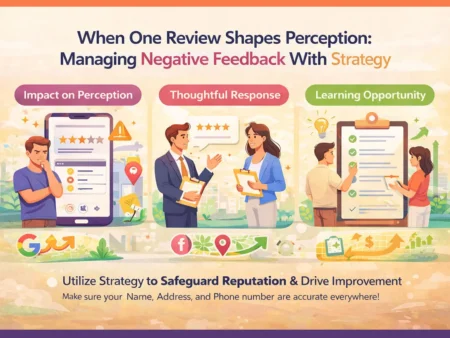
A single online comment can influence how potential customers evaluate a company, particularly in a competitive market like Clearwater. Modern consumers rely heavily on reviews when making purchasing decisions, and those opinions directly intersect with local SEO visibility. While handling a negative review can significantly shape public perception, it does not automatically define a business.
Understanding the connection between reputation management and search presence puts organizations in a better position to safeguard credibility and enhance their long-term digital performance.
Why Negative Reviews Carry Weight
Online reviews are a form of social proof. They show that you can trust them, that they care about your experience as a customer, and that they follow the rules of the business. If you’re looking at different options, even one bad review can make you think twice. Search engines also look at how many reviews a site has as part of their ranking signals. This means that reputation affects both how easy it is to find and how people see it.
Customers see negative feedback as a warning sign, which makes it stand out. But being thoughtful often cancels that effect. When we respond professionally, it shows that we are responsible and that we care about potential customers’ concerns.
The Business Impact Beyond First Impressions
Negative feedback has effects that go beyond just hurting your reputation. When customers are unsure, it can lower conversions, change how people refer to others, and hurt brand loyalty. If you keep getting complaints that go unresolved, it could mean your business isn’t running smoothly, which could make people less likely to come back.
On the other hand, organizations that respond positively can turn criticism into an opportunity. Talking about problems in public shows that you are open and willing to make things better. This method demonstrates that customer satisfaction remains a top priority while also promoting professionalism.
Responding With Professionalism and Precision
Emotional discipline is the first step to good review management. If you respond defensively or dismissively, the situation could get worse. A measured response recognizes the issue, gives more information when needed, and encourages a private solution. This balance protects the company’s reputation while also taking the reviewer’s experience into account.
Being on time is just as important. Prompt engagement shows that you care and stops people from thinking you’re ignoring them. Businesses that stick to the same way of responding to feedback make it easier to handle future feedback, which helps build long-term credibility.
Learning From Criticism
Negative feedback often has useful information about how to run a business. Customer complaints can reveal issues with service, communication, or processes. When you see criticism as useful information, it helps you keep getting better.
Companies that monitor feedback trends gain a better understanding of what their customers want. Making changes in response to recurring problems shows that you can adapt and strengthen your internal standards.
Reputation Management as an Ongoing Discipline
You shouldn’t react to reviews. Monitoring platforms, encouraging fair feedback, and tracking problem resolution are all part of a structured reputation management plan. This proactive approach reduces surprises and strengthens a brand’s voice.
Search visibility improves when reviews show that people are interested and responsive. Businesses that create a healthy review ecosystem show that they care about their customers and are trustworthy. Over time, this consistency builds trust and digital authority.
Frequently Asked Questions
Can one negative review seriously harm a business?
While a single review rarely defines a company, unresolved concerns can influence customer perception and reduce confidence.
Should businesses respond to every negative comment?
Yes. Professional engagement demonstrates accountability and reinforces a commitment to service quality.
How quickly should a response be posted?
Ideally, a response should be posted within twenty-four to forty-eight hours to demonstrate attentiveness and prevent escalation.
What if the review is inaccurate?
Respond calmly with factual clarification and invite private discussion to resolve misunderstandings.
Do reviews affect search visibility?
Yes. Engagement patterns and feedback volume contribute to credibility signals that influence discoverability.
Conclusion
A negative review represents more than criticism. It is a moment that tests professionalism, adaptability, and customer commitment in Clearwater. When managed strategically, feedback becomes an opportunity to reinforce trust, strengthen operational standards, and support local SEO performance. Businesses that approach review management with discipline protect their reputation while encouraging long-term growth. Expert guidance from iSEOU helps organizations navigate reputation challenges, turning difficult feedback into measurable progress and a stronger digital presence.
Picture Source: AI-generated